

Cookies Policy

The website of the University of Cádiz uses its own and third-party cookies to carry out analysis of use and measurement of traffic, as well as to allow the correct functioning in social networks, and in this way to improve your browsing experience.

If you want to configure cookies, press the button Customize Cookies. You can also access the cookie settings at any time from the corresponding link in the footer.

For more information about cookies you can consult the Cookies policy from the website of the University of Cádiz.

Cookies customization

The website of the University of Cádiz uses its own and third-party cookies to carry out analysis of use and measurement of traffic, as well as to allow the correct functioning in social networks, and in this way to improve your browsing experience.

For more information about cookies you can consult the Cookies policy from the website of the University of Cádiz. You can also access the cookie settings at any time from the corresponding link in the footer.

You can configure the website cookies according to their purpose:

  • Statistical analysis

    Third-party cookies (Google Analytics) are used on this site that allow the number of users to be quantified anonymously (personal data will never be obtained to identify the user) and thus be able to analyze the use made by users of our service, in order to improve the browsing experience and offer our content optimally.

  • Social networks

    Third-party cookies are used on this website that allow the proper functioning of some social networks (mainly YouTube and Twitter) without using any personal data of the user.

UniversidaddeCádiz
DEMMOCAD
noticia

La revista SSM – Population Health publica un artículo sobre multimorbilidad del equipo DEMMOCAD 7 November 2022
La revista SSM – Population Health publica un artículo sobre multimorbilidad del equipo DEMMOCAD

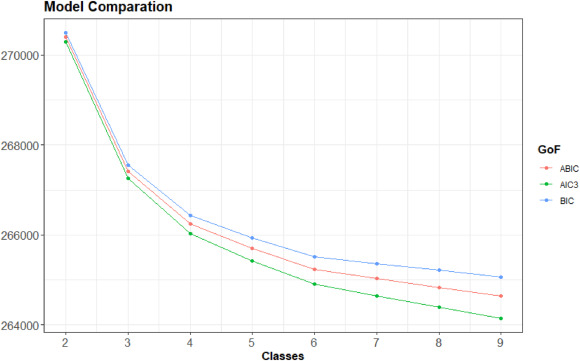
La editoria Elsevier ha publicado en el volumen nº 20 de la revista SSM Population Health,  el  artículo “Social inequalities in multimorbidity patterns in Europe: A  multilevel latent class analysis using the European Social Survey (ESS)”, como resultado de las investigaciones desarrolladas en el marco del proyecto DEMMOCAD.

La multimorbilidad está asociada a una menor calidad de vida, mayor discapacidad y mayor uso de los servicios sanitarios y es uno de los principales retos a los que se enfrentan los gobiernos en Europa. Con esta publicación se pretende responder a esta  brecha de conocimiento mediante la detección de patrones de enfermedades crónicas y sus determinantes sociales en 19 países europeos desde una perspectiva multinivel.

SSM Population Health,  es una revista de acceso abierto y revisada por pares que cubre todas las áreas relacionadas con la investigación en Ciencias Sociales y la salud de la población.

La Universidad de Cádiz  ha recibido una ayuda de la Unión Europea con cargo a los Fondos Europeos de Desarrollo Regional, para desarrollar el proyecto DEMMOCAD (PI-0028-2019), cuyo objetivo principal es  conocer la epidemiología de la multimorbilidad, sus determinantes e impacto sobre el sistema de salud y la calidad de vida de los pacientes de la provincia de Cádiz